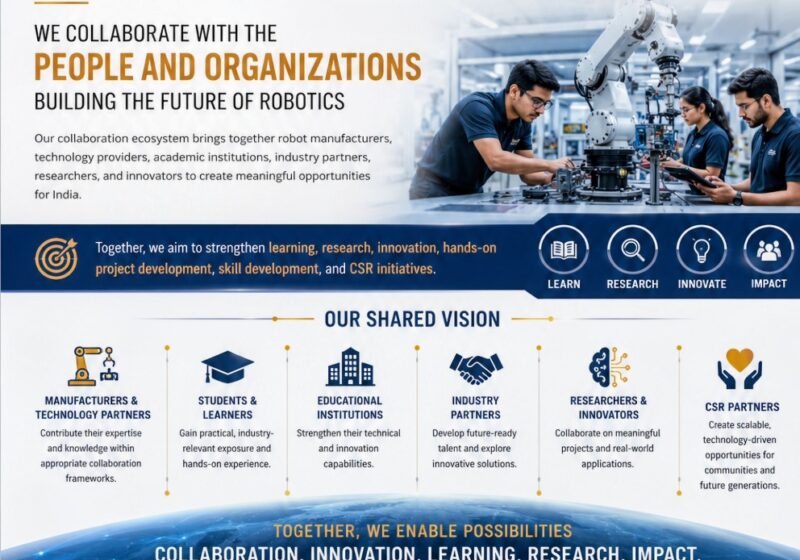
Two complaints coexist in every industrial region. Employers cannot find people who can be productive on a live project. Graduates cannot find employers willing to hire them without experience they have no way to obtain. Neither group is wrong, and the gap between them is narrower and more fixable than it looks.
What employers are really asking for
Rarely deeper theory. Almost always the applied habits that formal education does not have time to build: version control, reading somebody else’s code, writing a clear commit message, wiring a panel to a drawing, commissioning discipline, documenting what you changed, and asking for help at the right moment rather than three days later.
These are teachable in weeks by people who do the work daily. They are nearly impossible to acquire from a syllabus alone.
What a serious programme looks like
- Project-shaped, not lecture-shaped. Learners should ship something that is reviewed by a practitioner and rejected at least once.
- Real tooling. The same IDEs, ticketing systems, controllers and cloud accounts used on client work — not a simplified teaching environment.
- Assessment by portfolio. A repository, a wired panel, a working dashboard. Something an employer can inspect in ten minutes.
- Honest placement figures. Published, with denominators, including the people who did not finish.
Why employers should invest, not just recruit
Hiring from a pool you helped train is cheaper than competing for scarce mid-level engineers, and the retention is better because the relationship started earlier. It also fixes a structural incentive problem: a company that trains and loses people to competitors is still better off than a region where nobody trains at all.
What universities can contribute
Access, curriculum input and credibility. What they generally cannot supply on their own is exposure to production constraints — the messy realities of legacy systems, half-documented interfaces and a customer waiting. Industry partnerships that put practitioners in front of students, and students on real supervised work, close that specific gap.
A modest proposal
Pick one role your organisation hires repeatedly and struggles to fill. Design a twelve-week programme for exactly that role, with a practitioner reviewing work weekly. Run it once, publish the outcome honestly, and adjust. That is a slower answer than a recruitment campaign, and it is the one that compounds.